Monday, 10 June 2013

Hamptonne Country Life Museum

On a glorious, sunny Saturday we  went to explore Hamptonne Country Life Museum.  This is an old Jersey farm that has been restored to its former glory and now serves as a museum. The displays cover most things about Jersey farming (obviously) to the Good Wyf who gives you olden day kitchen tips. They say that a picture says 1000 words so here we go!

This is an apple press for making cider.


2012 was a very good year!


There are many Jersey cows in Jersey though we have seen some black ones recently!


We thought this was very amusing!


The Good Wyf's house!


I would like some of these kitchen scales!


Mike doing the laundry!


We are VERT grateful for electricity!


More triffids! We must find out what they are.


The apple orchard.


Apple blossom.


Tuesday, 4 June 2013

Sark

On Bank Holiday Monday the weather and tides were perfect for boating so off we went to explore with my in-laws. The first stop was Sark. This is one of the Channel Islands and, although it is part of the Baliwick of Guernsey, it has its own government and laws. We moored up in Dixcart Bay and Mike rowed us to shore in the dinghy. Quite the experience!


This windmill dates back to 1517! Looking pretty good I'd say for being near 500 years old.


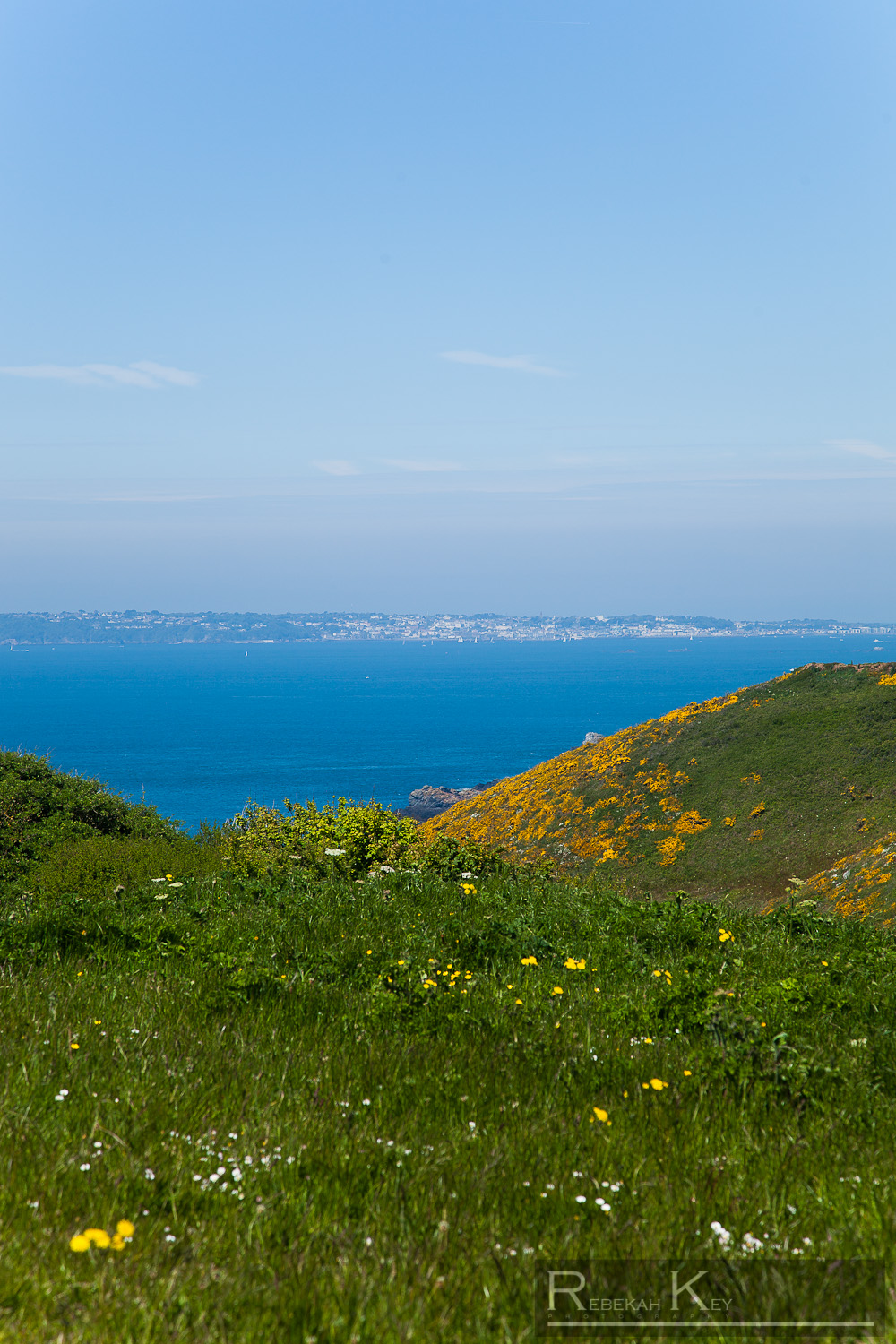
It is very close to Guernsey and there were some very pretty views across the bay.


There had been a scarecrow competition on Sark and there were some very interesting entries! This is one of my favourites and it won third place!


This is a view from the La Coupee which is a narrow ridge of rock joining Great Sark and Little Sark. The land on both sides of this causeway has been eroded away by the sea, and all that now connects Little Sark to the rest of the island is a narrow ridge a 3m wide and 90m in length, with a drop of to 80 metres on either side.

Until the beginning of the twentieth century, access to Little Sark was extremely difficult or, at best, unnerving. La Coupée was traversed by a narrow dirt track, and children are reputed to have had to crawl across it on their hands and knees to prevent being blown over the edge by the wind! I am very thankful that there are now metal railings on each side. During WW2 German POW's fortified La Coupee with concrete.


The smaller island to the left of the photograph is Brecqhou and it is the home of the Barclay Brothers. They live in a rather large castle. Look out for a photograph later!


There is a small,  disused silver mine on Little Sark. We didn't have time to fully explore it on this trip.


Cars are banned on Sark and the only form of motorised transport permitted are farm vehicles! Here is Farmer Mike!


Here is Dixcart Bay where we moored. The water was SOO clear!


Ship ahoy me shipmates!


Here is the Barclay Brothers castle! I took some better photographs with Mike's longer zoom! Maybe I'll add them in later!


La Hougue Bie

I have been a little slack on the blogging front for a few weeks so be prepared for several blog posts to come into cyberspace thick and fast!

On a very windy Saturday we met up with Kate and the boys-Aaron, Jared and Reuben-at La Hougue Bie, a neolithic burial mound, dating back to 3500BC.


The site consists of 18.6 metre long passage chamber covered by a 12.2 metre high earth mound. The site was first excavated in 1925 by the Société Jersiaise. Fragments of twenty vase supports were found along with the scattered remains of at least eight individuals. Gravegoods, mostly pottery, were also present. At some time in the past, the site had evidently been entered and ransacked.

On top of the mound were built two Medieval chapels. The remaining remains have been kept in good repair. There was once a folly surrounding the chapels called the Princes Tower but when this fell into a state of disrepair in the 1920's the Société Jersiaise tore it down as it was not considered fashionable to have Gothic architecture then. How ridiculous!


It is one of the largest and best preserved passage graves.  Although they are termed "passage graves", they were ceremonial sites, whose function was more similar to churches or cathedrals, where burials were incidental. Since the excavations and restoration of the original entrance of the passage observations from inside the tomb at sunrise on the spring and autumn equinox have revealed that the orientation of the passage allows the sun's rays to shine through to the chamber entering the back recess of the terminal cell. Although many passage graves showed evidence of continued activity into the Late Neolithic period, La Hougue Bie was abandoned before that time.

On the same site there is an extensive German underground bunker.  There are many displays from during the war, some of which are very poignant.  I still find it hard to grasp the appalling atrocities of the war.


I do think that 1976 is an excellent year to be born...............;)